
Common issues
Colds, coughs and sore throats
Medically reviewed byGuðbjartur Ólafsson, family physician and chief medical officer at Fjarlækningar
Colds, coughs, and sore throats are the most common reasons people seek medical care. The vast majority of upper respiratory infections are caused by viruses and clear up within one to two weeks without antibiotics.
Sometimes, however, a bacterial infection is the cause, for example, strep throat or a sinus infection, and treatment can then shorten the illness. Deciding whether antibiotics are appropriate is based on symptoms, duration, and, when relevant, the result of a self-test.
Symptoms of a cold, cough and sore throat
- Runny or blocked nose and sneezing
- Soreness or burning in the throat
- Cough, dry or with phlegm
- Fever, tiredness and aching muscles
- Pain or pressure in the sinuses
- Hoarseness
Medicines for a sore throat and cold: when are antibiotics needed?
Colds and most sore throats are caused by viruses, and antibiotics do not help against them. Painkillers that also lower fever, such as paracetamol or ibuprofen, can ease the discomfort while the illness runs its course.
Antibiotics are appropriate when a bacterial infection is behind it, such as strep throat or a persistent sinus infection. The doctor decides based on your symptoms, how long they have lasted and, where relevant, a CRP or strep test you take at home.
What can be resolved?
- Cough and bronchitis without severe symptoms.
- Sore throat and streptococcal throat infections.
- Sinus infections.
Self-test
You collect the test from the nearest pickup point, take it where you want, and enter the result in the patient portal. A doctor will assess it together with your answers.
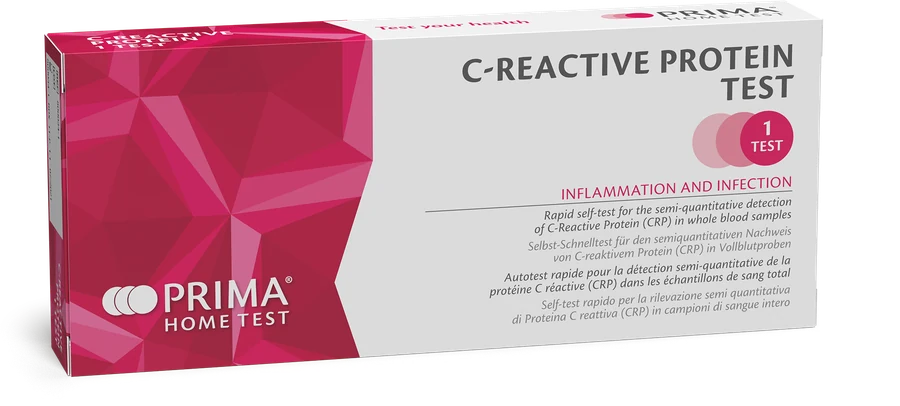
CRP test
Measures the inflammatory response in the blood with a single drop from your fingertip. The result helps the doctor assess whether the symptoms are more likely caused by a virus or bacteria and therefore whether antibiotics are appropriate.
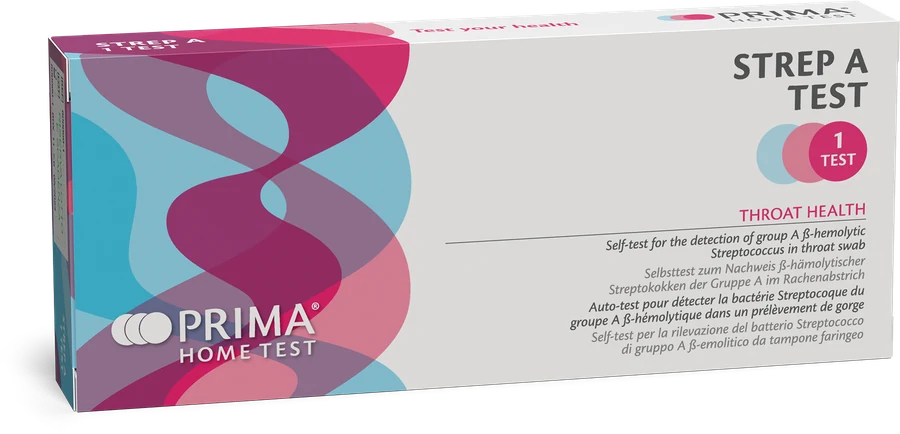
Strep test
A throat swab that checks for streptococci, the most common bacteria behind sore throats that sometimes require antibiotics. Results are available within a few minutes at home.
When is the service not suitable?
- Difficulty breathing, shortness of breath, or chest pain.
- Difficulty swallowing your own saliva or opening your mouth.
- High fever with neck stiffness or skin bleeding.
- Symptoms lasting longer than ten days or worsening after initial improvement.
General advice
Here is general advice on treating common symptoms of respiratory infections.
Fever and body aches
Fever is the body’s natural response to infection and helps the immune system fight it. Fever itself is not dangerous, and there is no need to lower it unless you feel unwell. It is fine to take medicine if the symptoms are uncomfortable.
Caution: Do not use anti-inflammatory medicines (e.g. Ibufen) if you have:
Runny nose and nasal congestion
It is important to drink more water than usual to thin mucus and prevent the mucous membranes from drying out.
Use three times a day to cleanse and moisturize. Good to use before a steroid nasal spray.
One spray in each nostril up to 3x a day. Do not use for more than three to five days in a row.
Productive cough
Drink more water than usual to thin the mucus.
One effervescent tablet dissolved in water, up to three times a day while symptoms last.
Túfen expectorant syrup may also be used.
Sore throat
If you have confirmed streptococcal infection, avoid close contact until 24 hours have passed since the first antibiotic dose.
Warm liquids (tea with honey) and throat lozenges (e.g. Strepsils).
Paracetamol or Ibufen if needed.
Digestion and antibiotics
Antibiotics can disrupt the gut flora. Probiotics (e.g. Optibac) are recommended at least 1 hour before or after taking antibiotics. It is also good to continue for a few days after finishing antibiotic treatment.
Rest and fluids
When should you seek medical care?
The advice above is general and does not replace medical advice. Seek medical attention if symptoms worsen or do not go away.
Frequently asked questions
Do I need antibiotics for a sore throat?
Usually not. Most sore throats are caused by viruses and pass in a few days. If a strep test is positive, or the symptoms point to a bacterial infection, the doctor can prescribe antibiotics.
How long does a cold last?
A cold usually passes in seven to ten days, but a cough can linger for several weeks afterwards.
When should I see a doctor about a cough?
If you are short of breath, have chest pain, have had a high fever for several days or the cough has lasted more than three weeks.
What is a CRP test?
A simple home test with a drop of blood from a fingertip that measures inflammation. It helps the doctor judge whether the infection is more likely viral or bacterial.
Please note
Fjarlækningar handles simple, clearly defined issues. Some cases require an examination, testing, or emergency care - and are directed to another care pathway. In emergencies, call 112.
Submit a case
You sign in with electronic ID and answer a short questionnaire. A doctor reviews the case and recommends treatment.
Open patient portal